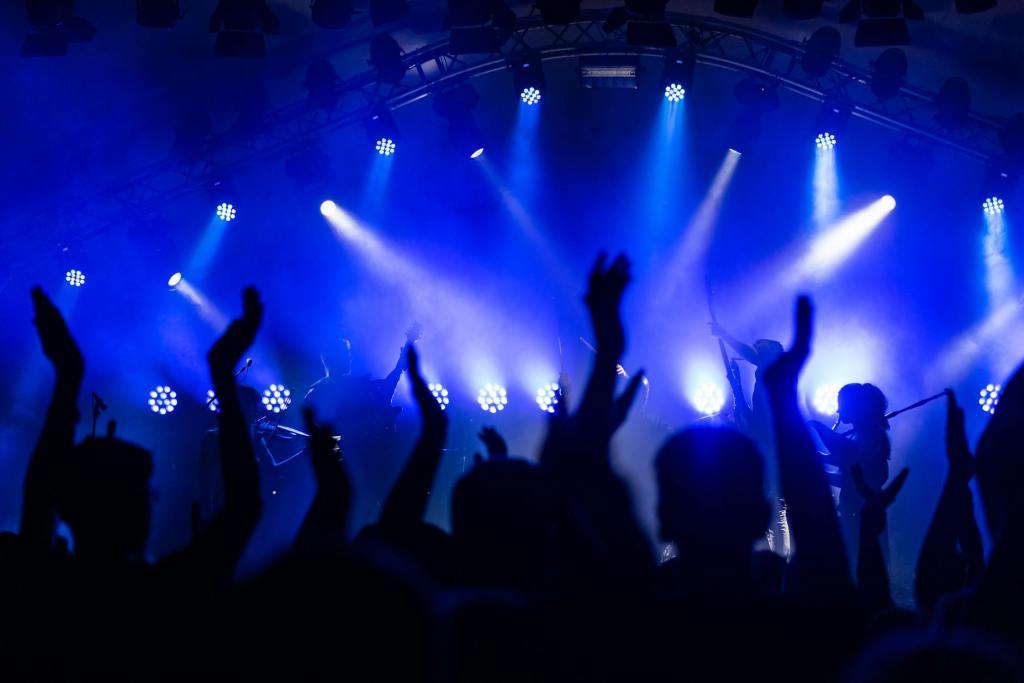
The Birmingham Odeon was a medium-sized venue, with a capacity of around 2,400, and held concerts between the early 1960s and the mid-1980s. It was such a good space to see live music, intimate and renowned for its acoustics, but still large enough to attract all but the mega artists. I missed out on seeing The Beatles (1964) and the Rolling Stones (1966), and was still a bit young to have seen Bob Marley play there in 1975. As ticket prices in the late 1970s ranged between £2 and £3.50, it was possible to attend regularly (£2 then is worth around £20 today). Although these concerts were profitable, musicians in this period made their ‘big money’ from record sales, with live concerts being a way to promote a new release. The reasonable pricing meant that we attended many concerts at the Odeon, even when not being huge fans of the band or artist. In my early teens it was all about blues rock or prog rock (with a focus on guitar players), but at college I was exposed to a new world of reggae, funk and soul music.
Black Sabbath (June 5th, 1978)

This was a memorable concert for a slightly odd reason. I was not particularly a Black Sabbath fan in my mid-teens, but did like the dark, heavy tone that Tony Iommi managed to produce, so was easily persuaded by my concert going friends. We arrived early, as usual, and so we were there when the support act came on stage. I don’t recall many support bands, and most seem to disappear soon after their supporting role, so we were not expecting very much that night.
It was slightly odd that an announcer introduced this support band as just having flown in from the Netherlands, implying that we should pay them more attention than we normally gave support acts. A young guitarist wondered on to the front of the stage, and to say he grabbed our attention could be one of rock musics great understatements. We were just chatting in our usual spot, in the front stalls, as all the band hadn’t reached the stage, when suddenly there was an explosion of sound from his guitar, ripping into the appropriately named solo guitar piece, ‘Eruption’. He was doing stuff on the guitar that I didn’t know was possible (including what became his trademark tapping technique), pouring out a dense, layered and intense sound. A bit stunned, I frantically searched for my ticket to find out who these guys were. The name of the support act was Van Halen. I turned to my friends for info, but none of my School chums had heard of them. It turned out that this band from the USA had just released their debut album, called ‘Van Halen’ and ran through most of these tracks in this live set. To be standing only a few feet from Eddie Van Halen playing ‘‘Runnin’ With The Devil’ and ‘You Really Got Me’ is not something I will forget. The next day I got a copy of the album, which still sits proudly in my collection. I seem to remember that there were calls for encores when they had finished, which was unheard of for support bands I had seen. The look on my friends faces confirmed my belief that we had just witnessed something special.
We still had Black Sabbath to come, and with an energised crowd, the atmosphere was electric. We thought Van Halen were loud, but the opening chords from Sabbath took it up another level, which may have been a factor in what happened next. Only minutes into the first song, something went bang (which I liked to imagine was Tony’s guitar stack), and everything went quiet. The band left the stage, and the crew frantically tried to fix the problem, but to no avail, and the concert came to an abrupt end. Sabbath rearranged a concert for the following week, but unfortunately not with Van Halen as support. Sabbath did put on a great performance that second night, one of the last with Ozzy Osbourne as vocalist, but I still couldn’t get over the experience from the previous week.
It was a good year for rock bands at the Odeon, as earlier that year I had seen both Judas Priest and Budgie play in the same month.
Thin Lizzy (1977, 1979, 1980)

I first saw Thin Lizzy on the BBC ‘Top of the Pops’ programme in 1976, playing ‘Boys Are Back in Town’. I was always drawn to fine guitar players, and this band apparently had two! After listening to the two albums from that year, ‘Jailbreak’ and ‘Johnny the Fox’, I realised that one of these guitarists was exceptional.
Brian Robertson had been described by critics as a young ‘Scottish firebrand’, which seems to be an apt description. However he was a bit of an enigma, studying cello and classical piano for eight years before switching to guitar. There is no doubt he was a virtuoso guitar player, but more than that, he had an amazing rhythmic, punchy, almost funky style. The night before leaving for a USA tour in December 1976, he was involved in a barroom fight (trying to protect a friend) and severed a nerve in his hand. Super sub, Gary Moore, stepped in for a replacement US tour (supporting Queen), and it took some persistent persuasion from fellow Lizzy guitarist, Scott Gorham, for Phil to allow Robertson back into the band.
This formidable lineup hit the road in 1977 for a series of sellout UK concerts. We managed to get front stalls at the Birmingham Odeon, probably by having multiple people speed dialling the venue when the tickets became available. This was my first time at the Odeon, and the first time I had been this close to a rock band….and what a band! Phil Lynott was a perfect front man, tall, imposing, charismatic, with growling vocals and a mean bass (he had mirrors on this to frequently dazzle the audience). Brian Downey is one of the great rock drummers, whose drum solo was genuinely worth its place in the concert (I have heard many that haven’t been). Then you had the two guitarists. I have already enthused about ‘Robbo’, but Scott Gorham in any other band would have been the standout player. To his credit, on stage he accepted his 2nd guitar role, played some well crafted solos, and combined with Robertson to create the signature Lizzy harmonic twin guitar sound.
It was a night when you knew from the start that this was going to be special. There were so many great songs, with ‘Don’t Believe a Word’ and a really funky version of ‘Johnny the Fox’ being memorable. Robbo’s solo in the ballad ‘Still in Love with You’ was probably the greatest live guitar playing that I have ever seen. It was powerful and loud, but also wonderfully lyrical, capturing the essence of Phil’s soulful words about a lost love. What made Lizzy special live was not only the energy and showmanship, but also the way they would not just play a repeat of what was on the record. They would slow songs down, add different guitar solos, and play covers or unrecorded songs.
The double live album, ‘Live and Dangerous’, released the following year, which was recorded during this tour, is rated by many critics as being the greatest live rock album ever recorded. There is controversy about parts that may have been manipulated in the studio, but you can’t fake the energy of this live performance, and I can personally testify that they were indeed that good!
The following year, Phil’s relationship with Robbo worsened considerably, and he left the band for good. Gary Moore was brought in, this time as a permanent member of the band. My next experience of a Lizzy concert was in April 1979 at the Odeon. I didn’t know much about Gary Moore at that time, and was sceptical that anyone could adequately replace Robbo; however, Gary was another virtuoso player, with a dazzling technique. He gave a slightly different slant to the band, being perhaps more bluesy than Robertson, but still had the wow factor that I didn’t expect to hear again.
The final time I caught Lizzy was in May 1980. Gary had gone by this time, and so Snowy White joined the band. This was not a good fit for Snowy, but fortunately Scott stepped up to take the lead guitarist role, and led the line very well. They were always good value, but this concert lacked some of the firepower that I was used to seeing in a Lizzy concert.
Steel Pulse (October 1978)

The album Handsworth Revolution became the soundtrack to my time at college. Reggae, on the surface, has such a laid-back, joyful sound, but it also carries a powerful message about social injustice. Steel Pulse was formed by a bunch of school friends in Handsworth, at a time of political turmoil in the UK. Their blend of Jamaican Rastafarian rhythms and urban working-class roots produced an album that is still considered one of the greatest UK reggae albums.
The first thing I noticed at the concert was the diverse ethnic mix of the audience, showing the wide appeal of this earthy ‘street’ reggae. This band certainly had a powerful political message, revolving around the injustice dealt out to Black people, both historic and current; however, David Hinds’ lyrics argue the issues intelligently, and blends in the underlying Rastafarian philosophy of peace and love.
The sound was amazing in this auditorium, with the sharp ‘skank’ of the guitar driving the music forward, and a bass you could feel more than hear. As soon as they came on stage, the crowd was ready to dance. Even for a reluctant dancer like me, it was hard to keep still. David Hinds’ voice soared above the music, using phrasing heavily influenced by Bob Marley. They performed an extended version of ‘Handsworth Revolution’, which is my personal favourite, but perhaps the most powerful part of the night was a heartfelt performance of the protest song ‘Ku Klux Klan’. A concert for the head and feet.
Japan (November 2nd, 1982)

I remember seeing Japan perform on the Old Grey Whistle Test in early 1982. This programme, and Channel 4’s The Tube (with Jools Holland), were compulsory viewing for music fans in the 1970s/1980s. Annie Nightingale introduced Japan by saying she had been taken by surprise, as these guys are a lot more than just another glam rock band. Following the raw energy of punk, I was a bit dismayed by the whole New Romantics scene in the late 70s-early 80s, although I could see the appeal of bands like Duran Duran, Spandau Ballet, and The Human League. I learned later that Japan’s association with ‘New Romantics’ was unintentional, as they had been wearing make-up and flamboyant clothes since they started out in the mid-1970s.
Listening to the band perform ‘The Art of Parties’ on the OGWT, I had to agree with Annie, as underneath the flamboyance lay serious musicians, with a musical originality and sophistication I had not heard from in that current scene. Soon after seeing their TV performance, I got hold of their UK ‘breakthrough’ album ‘Tin Drum’ (although previous albums had been very successful in Europe, Canada, and Japan), and began looking for concert dates. Little did we know that the 1982 tour would be their last. It was the concert at the Odeon in November 82 that led me to becoming a lifelong fan, and even after all these years, one of their albums is still likely to be found in my current listening box.
I think what surprised me most about the concert is that they were really an excellent live band. I had seen a few bands from this era (including Duran Duran) that had been less impressive than on record, but Japan were very different. They had a driving rhythm, led by Steve Jansen (David Sylvian’s brother) on drums. Steve is a totally unconventional drummer, combining electronics and world music rhythms. The combination of Steve’s drums, with the imaginative fretless bass of the late (great) Mick Karn, is the foundation of Japan’s sound. Mick Karn’s stage persona was strange, but weirdly compelling, and the sound he achieved from that bass guitar was extraordinary. David Sylvian’s baritone sounded even richer than on record, with a goosebump-raising rendition of ‘Ghosts’ being the highlight. The guitarist Rob Dean had left the band after the ‘Gentlemen Take Polaroids’ album, probably because the band had moved away from the funky guitar foundation to a more art-pop electronic sound. The guitarist on this tour was Masami Tsuchiya, whose maverick style certainly added to the performance.
The last concert of this great band was in the following month, on the 16th December in Nagoya, Japan. It is a testament to them that a live concert album (and video) from this UK tour, ‘Oil on Canvas’, became their greatest commercial success (which was rare for a live album). Within 6 months the band had broken up, not being able to get over tensions caused by Mick Karn’s girlfriend, the photographer Yuka Fujii, moving in with David Sylvian.
Third World (May 6th, 1982)

This was another band that came to my attention during my time at college. We had a memorable Eurail trip during this period, where twelve of us set off to explore Europe. We didn’t get much further than the south of France and northern Italy, but we had many adventures on the way, including being raided on the beach by French police, and being thrown out of a Monte Carlo casino – but those are stories for another post. The album we were all listening to at the time was Third World’s ‘96° In The Shade’, and every time we had lunch under the trees, the group broke out singing the title track (which is called 1865 on the album). Fortunately we had some decent singers amongst us, with French locals at the beach Café joining in the chorus.
Although my friends all went off to different parts of the country for university or work, we had a reunion in 1982 at the Odeon for the Third World concert. The band had released a few albums since ‘96°’, including their breakthrough album ‘Journey To Addis’, but at the concert they played all of our favourites, including ‘Jah Glory’, ‘Tribal War’ and, of course, ‘1865’. Although the band had a reggae foundation, they were pioneers of Reggae Fusion, and seamlessly merged in elements of soul and R&B, with the song from the ‘Addis’ album ‘Now That We Found Love’ being a classic example. Again, the Odeon provided an excellent acoustic for the energetic drumming, skank guitars, high vocal harmonies and thumping bass.
If there is an underlying theme for my musical taste, then it has to be rhythm, and this band had this in spades. The atmosphere was more of a party than a formal concert, something I didn’t experience again until a few years later, when I went to a riotous Prince concert at Wembley Arena. The co-founder of Third World was another classically trained cello prodigy, turned guitarist (see ‘Thin Lizzy’ concert), Stephen “Cat” Coore, who also happened to be the son of the Jamaican Deputy Prime Minister. He certainly was not the same type of guitarist as Brian Robertson, but on stage they did share an innate musicality and sense of rhythm.
It was a joyous evening, with a driving reggae beat, a jubilant audience, and a meeting with friends, which all served to bring back memories of carefree times singing under the trees of southern Europe.
Maze (March 24th, 1982)

The band was put together by Frankie Beverly in the early 1970s, and was originally called ‘Raw Soul’. They were mentored by Marvin Gaye and eventually got a recording contract with Capitol Records in 1976. Their first album, ‘Maze, Featuring Frankie Beverly’, was a huge success, and included the classic single ‘Happy Feelings’. I first caught sight of them from a TV showing of a live performance in 1981. They used performances from that tour to produce a wonderful live album, ‘Live in New Orleans’, which was another great success, and gave them a devoted following on both sides of the Atlantic.
Maze was another band that was much better live than on studio albums. Their music was a smooth Californian take on soul, funk, and R&B. Frankie Beverly was a force of nature, a bundle of energy on stage, with a sweet, soulful voice and an endearing way with fans. He would lead the band from the front, either on rhythm guitar or keyboard. Although the band was very polished, it was Frankie Beverly’s performance that made the show memorable. The audience in the Odeon was fairly restrained for the first few songs, but then with the song ‘Southern Girl’, everyone was up dancing for the rest of the show. A standout from the night was an extended version of the song ‘Joy and Pain’, with Frankie leading the audience in singing the chorus. They subsequently released ‘Live from New Orleans’ as a DVD, which does capture the brilliance of their live performance, but does not get close to the experience of standing four rows back at the Birmingham Odeon.


Leave a Reply